From the director
Director's video
Serena Aurora on the making of Karsha Nuns and what this journey meant for both communities.
Watch on YouTubeFrom a remote nunnery in the Himalayas to the experimental community of Auroville, Karsha Nuns follows ten women as they step beyond the world they have always known. What begins as a journey becomes an unexpected exchange between two very different communities — exploring spirituality, sustainability, women’s empowerment and what we can learn from one another.
THE DOCUMENTARY What happens when two very different communities meet? Filmed across Zanskar, Ladakh and Auroville, Karsha Nuns follows the women of Karsha Nunnery from their remote Himalayan home into a world they have never experienced before. In Auroville, the nuns encounter new approaches to sustainability, women’s health, education, music, waste management and community living. But this is not simply a story about what the nuns discover. It is a story about exchange. As two communities meet, each brings its own knowledge, traditions and ways of understanding the world. The result is an intimate exploration of women, spirituality, sustainability and the unexpected connections that emerge when we step into one another’s worlds.
WATCH THEIR JOURNEY 01 — FROM ZANSKAR TO AUROVILLE Ten Buddhist nuns leave their remote Himalayan home and begin an extraordinary journey across India. 02 — ARRIVAL: A NEW WORLD After travelling thousands of kilometres, the nuns arrive in Auroville and encounter a very different approach to community, spirituality and everyday life. 03 — EXCHANGE: CULTURES MEET IN PRACTICE Through sustainability, music, women’s health, education and community life, two communities begin learning from one another. 04 — REFLECTION: WHAT REMAINS As the journey draws to a close, moments of reflection reveal the relationships, discoveries and questions that remain.
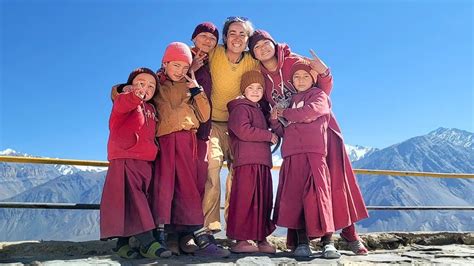
A simple question that became a two-year mission
HOW IT ALL BEGAN In 2023, filmmaker Serena Aurora travelled to Zanskar as part of a filmmaker exchange between Auroville and Zanskar. During the journey, she fulfilled a long-held wish to spend time living at Karsha Nunnery, sharing in the rhythms of daily life alongside the women who live there. Communication was limited, but after several weeks a friend helped explain Auroville and Serena’s work to the nuns. Then came a simple question: Could we come? That question became the beginning of an extraordinary exchange — and eventually the documentary Karsha Nuns.
For ten days, the Karsha nuns immersed themselves in life in Auroville. They explored ecological living and natural building, learned about waste management, experienced music and sound at Svaram, took part in reusable menstrual-pad training with EcoFemme, visited the Matrimandir and encountered a community shaped by a very different approach to spirituality, sustainability and collective life. But the learning travelled in both directions. The nuns brought with them their own experience of simplicity, resilience, community and Buddhist practice. For ten days, two very different worlds came together — not simply to observe one another, but to learn from each other.
THE JOURNEY CONTINUES The exchange did not end when the nuns returned to Ladakh. In Auroville, they learned how reusable menstrual pads could offer a more affordable and environmentally responsible alternative to disposable products. Back in the Himalayas, that knowledge became action. The nuns began making reusable pads themselves and developed the Eco Nuns initiative. They went on to share what they had learned with girls and women through schools and communities across Ladakh and Zanskar. What began as a cultural exchange created ripples far beyond the original journey. They came to Auroville as visitors. They returned home carrying an idea for change.
Watch on YouTubeFrom the director
Serena Aurora on the making of Karsha Nuns and what this journey meant for both communities.
Watch on YouTubeReusable menstrual-pad training and women’s health.
Watch on YouTubeMusic, listening and spiritual practice at Svaram and the Tibetan Pavilion.
Watch on YouTubeA moment of prayer, presence and cultural exchange.
Watch on YouTubeHow it All Began
ABOUT KARSHA NUNNERY Life in the mountains of Zanskar Karsha Nunnery lies in the remote Zanskar Valley of Ladakh, high in the Indian Himalayas. Home to a community of around 40 Buddhist nuns, it is a place shaped by spiritual practice, community life and the realities of living in one of India's most isolated mountain regions. The nuns' days are rooted in prayer, study, work and service, while their lives remain deeply connected to the surrounding villages, mountains and changing seasons. Life here is simple, demanding and profoundly communal. It was within this world that Serena first began filming the women — documenting not only their spiritual lives, but their humour, friendships, challenges, resilience and everyday experiences. What began as an attempt to understand their lives eventually became a relationship — and from that relationship, an unexpected journey began.
THE FILM IS CURRENTLY IN POST-PRODUCTION We are now seeking distribution partners, festivals, broadcasters, screening hosts and organisations interested in helping Karsha Nuns reach audiences in India and internationally. We are especially interested in connecting with organisations working in women’s empowerment, Buddhism, sustainability, menstrual health, education, community development and cultural exchange. Interested in screening, supporting or distributing the film? We would love to hear from you. DISTRIBUTION & PARTNERSHIPS HOST A SCREENING CONTACT US
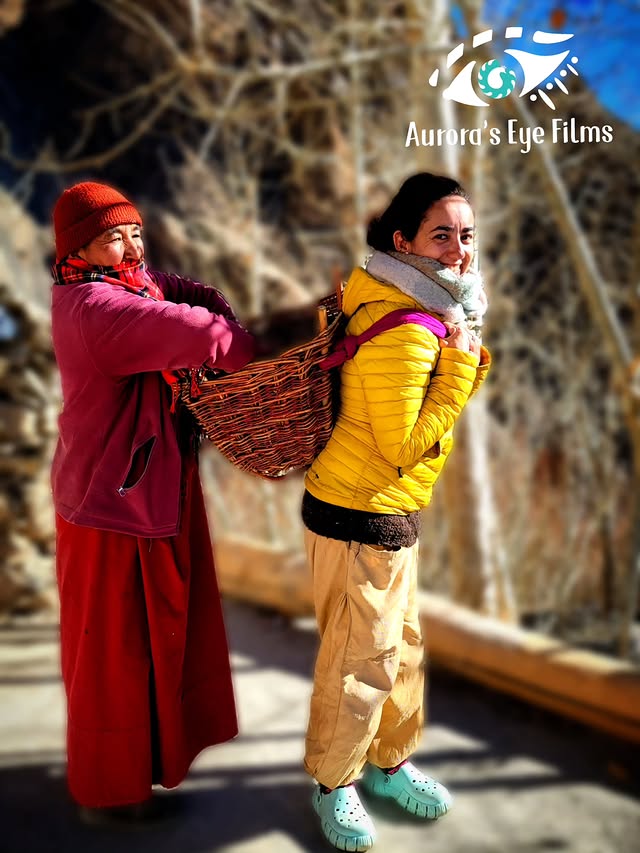
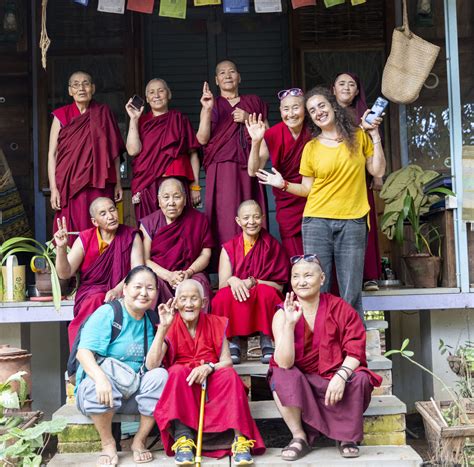
From a remote nunnery in Zanskar to communities around the world.
From a remote nunnery in Zanskar to communities around the world, we want this story to keep travelling. We are looking for partners, organisations and audiences who believe this story deserves to be seen. HOST A SCREENING Bring Karsha Nuns to your community, organisation, school, university or cultural space. DISTRIBUTION & PARTNERSHIPS Help connect the film with festivals, distributors, broadcasters and international audiences. SUPPORT THE FILM Help us complete post-production and prepare the documentary for release. For ten days, two very different worlds came together — not simply to observe one another, but to learn from each other.
.